If you walked into a high-end commercial gym and noticed a row of used treadmills, you might assume the owner was trying to cut costs.
Most people would.
But in reality, many of the gyms investing in used exercise equipment aren’t operating on tight budgets or settling for second best. They’re established facilities with strong cash flow, growing memberships, and the ability to purchase brand-new machines outright if they wanted to.
The decision to buy used isn’t driven by financial limitation.
It’s driven by strategic thinking.
Experienced gym owners understand that equipment is a business asset, not a status symbol. They evaluate performance, lifecycle value, downtime risk, and return on investment, not just what looks newest on a showroom floor.
In the commercial fitness industry, buying used is often a calculated move designed to increase flexibility, protect capital, accelerate timelines, and maintain operational control.
For many high-performing gyms, used equipment isn’t a compromise.
It’s a competitive advantage.
Here’s why smart gym owners choose used even when budget isn’t the issue.
It’s About Speed, Not Savings
New gym equipment sounds great in theory, until you try to actually get it.
Right now, lead times from manufacturers can stretch for months. You place an order, wait…and wait… and wait some more. Meanwhile, your members are complaining, your revenue is sitting on the table, and your grand opening keeps getting pushed back.
Used commercial gym equipment flips that dynamic.
A gym can get high-quality commercial machines quickly, install them, and start operating instead of sitting around waiting on a backordered shipment.
For many owners, that lost time is far more expensive than paying full retail.
Commercial “Used” Isn’t What Most People Think
When people hear the word “used,” they often imagine outdated, unstable machines with worn padding, flickering screens, and questionable reliability.
That perception couldn’t be further from the reality of the commercial fitness market.
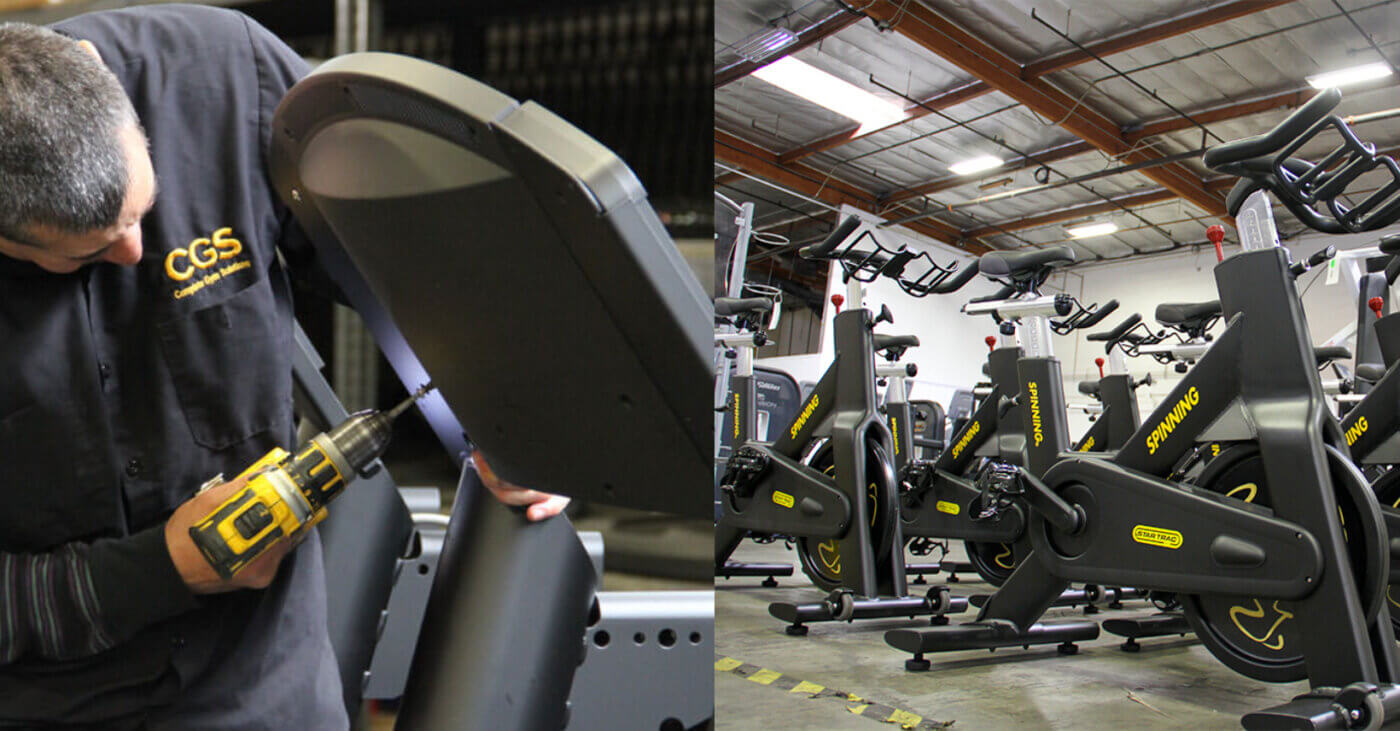
Most commercial-grade used gym equipment doesn’t come from someone’s garage or a lightly used home setup. It typically comes from major national gym chains that refresh their floors every few years to stay current with branding cycles. It comes from established facilities that closed, merged, relocated, or strategically downsized. It also comes from gyms upgrading layouts, shifting training models, or consolidating equipment lines, not from machines that have been run into the ground.
Commercial fitness equipment is engineered to handle relentless daily use, often thousands of workouts per week. Frames are reinforced. Motors are industrial-grade. Components are designed for long service cycles. Even after several years in operation, these machines frequently have more structural integrity and remaining lifespan than many brand-new, lower-tier commercial alternatives.
In other words, “used” in the commercial fitness world doesn’t mean worn out.
It means proven.
It means equipment that has already demonstrated durability in high-volume environments. It means machines built for performance, not appearance. And in many cases, it means acquiring premium, battle-tested equipment that still has years of reliable operation ahead without paying the premium price of buying it new.
For smart gym owners, buying used isn’t about settling. It’s about securing commercial-grade strength, reliability, and longevity at a value that protects capital and improves return on investment.
Depreciation Works in the Buyer’s Favor
New equipment loses significant value the moment it’s installed. Used gym equipment already took that hit.
Savvy gym owners see this clearly: why pay full price for something that will drop in value immediately, when you can buy the same caliber machine after it already depreciated?
They’d rather save that capital for:
- better staff
- smarter marketing
- facility upgrades
- or simply stronger cash flow
In other words, buying used isn’t about being cheap, it’s about being smart with money.
Reliability Over Flash
Some gyms actually prefer older commercial models because they’re proven. New machines can be flashy, full of screens, and packed with tech, but that also means more things that can break.
Older commercial equipment is often simpler, sturdier, and easier to service.
For many gym owners, reliability beats brand-new shine every time.
They’d rather have something that runs smoothly for years than a cutting-edge machine that turns into a maintenance headache.
Flexibility to Test, Adapt, and Scale Without Pressure
One of the biggest advantages of buying used equipment isn’t just cost savings, it’s operational flexibility.
New equipment often forces all-or-nothing decisions. Once you commit tens or even hundreds of thousands of dollars to brand-new machines, you’re locked in. Layout mistakes become expensive. Underused machines sit on the floor because replacing them feels financially painful. Scaling requires another major capital outlay.
Used equipment changes that dynamic entirely.
It gives gym owners the freedom to experiment intelligently. Instead of making high-risk bets, they can refine their floor in real time, adjusting based on actual member behavior, not assumptions.
That means testing new layouts without fear of sunk costs. Trying different equipment combinations to see what drives engagement. Introducing functional or specialty pieces to gauge demand. Scaling up popular zones and phasing out underperforming areas.
And if something doesn’t deliver the return you expected? You’re not trapped. You can rotate it out, reposition it, or resell it without absorbing a massive financial loss.
This kind of flexibility is especially powerful in a fitness industry that constantly evolves. Training trends shift. Member demographics change. Programming adapts. The gyms that grow are the ones that can respond quickly, not the ones locked into rigid, high-cost equipment decisions.
Buying used creates breathing room. It allows smart owners to treat their equipment strategy like a living system rather than a fixed investment.
In short, used fitness equipment doesn’t just lower cost, it increases agility.
Want to Build a Faster, Smarter, and Stronger Gym?
Opening a new gym. Expanding your footprint. Refreshing an aging floor. Replacing unreliable machines. Scaling after growth.
Whatever stage you’re in, one thing is constant: equipment decisions shape your margins, your member experience, and your long-term stability.
You don’t have to choose between quality and cost. And you don’t have to wait months for backordered machines while revenue sits idle.
Used Gym Equipment helps gym owners move decisively. Every machine is commercial-grade, built for high-traffic environments, and thoroughly inspected to ensure it performs the way a serious training facility demands. These aren’t residential units or cosmetic flips, they’re durable, proven machines designed to withstand thousands of workouts per week.
Choosing used means:
- Faster turnaround times
- Lower capital risk
- Stronger cash flow protection
- Greater flexibility to test and scale
- Reliable, battle-tested equipment
Instead of locking up capital in brand-new inventory that immediately depreciates, you can deploy equipment strategically, allocating savings toward marketing, staffing, programming, branding, or facility upgrades that actually grow your business.
Smart gym owners don’t just buy equipment.
They build systems that support growth, efficiency, and long-term profitability.
If you’re ready to upgrade your floor, increase capacity, or make more strategic equipment decisions, the team at Used Gym Equipment can help you identify the right machines for your layout, goals, and budget.
Browse available inventory, request a custom quote, or speak with a specialist today, and start building a gym that runs smarter, opens faster, and performs stronger from day one.
Call us at 310.638.4800 or visit www.UsedGymEquipment.com to learn more.